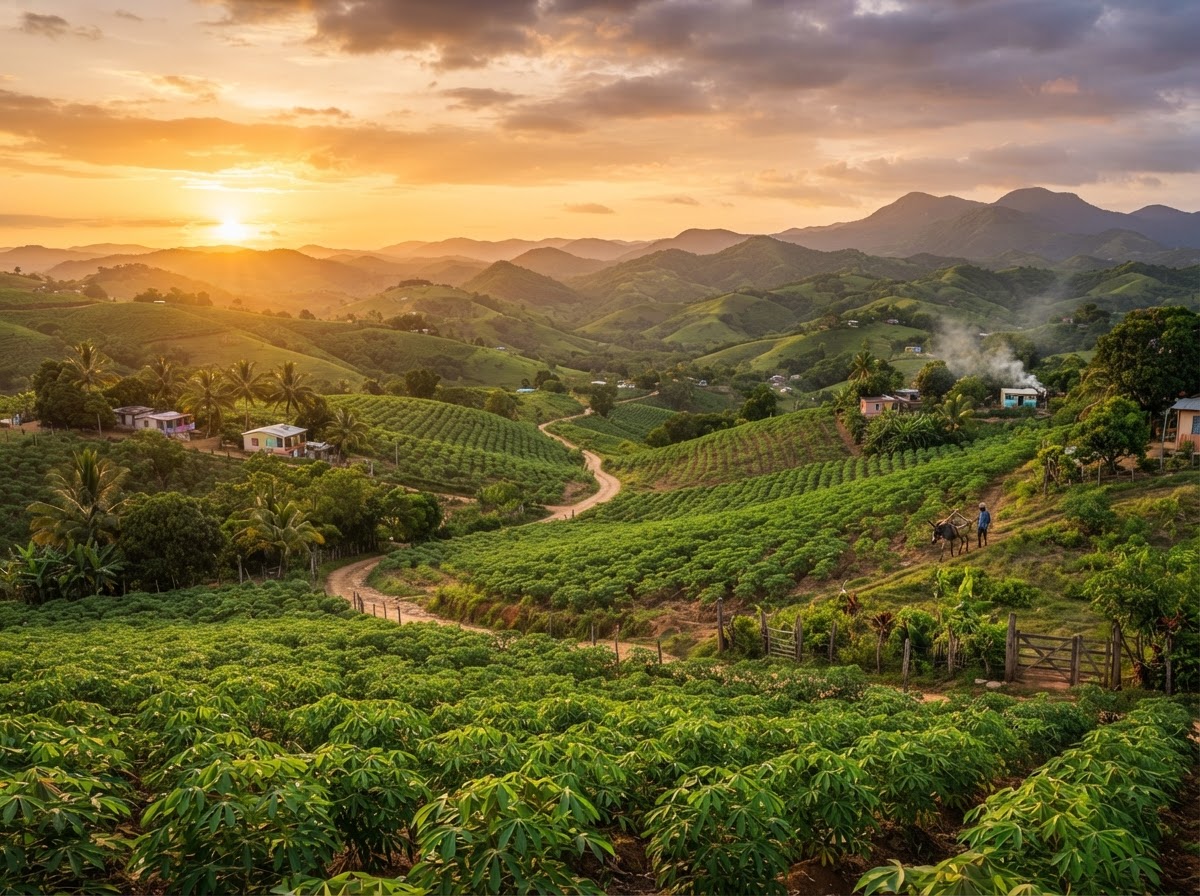
The Taíno Roots of Casabe
Long before European navigators set sail across the Atlantic Ocean, the Indigenous Taíno people of Quisqueya (the island of Hispaniola, shared today by the Dominican Republic and Haiti) cultivated yuca as their sacred staple crop. They transformed the dense starchy root into a durable, golden flatbread they called casábi.
In a tropical climate where wheat spoiled in humid conditions and yeast breads molded within hours, casabe provided a miraculous food source: naturally crisp, completely moisture-free after baking, and capable of lasting months without refrigeration. It became the bread of exploration, daily sustenance, and communal celebrations.
Global Recognition by UNESCO
In December 2024 UNESCO inscribed the knowledge and traditional practices for making and consuming cassava bread (casabe) on the Representative List of the Intangible Cultural Heritage of Humanity, through a joint nomination by the Dominican Republic, Cuba, Haiti, Honduras and Venezuela.
This inscription underscores the enduring value of traditional knowledge passed through maternal lines and artisan bakeries across the Caribbean basin.
Monción: The Heartbeat of Dominican Casabe
While casabe is enjoyed across the Dominican Republic, the municipality of Monción, in the northwestern province of Santiago Rodríguez, is renowned as the undisputed “Capital of Casabe.” Nestled among the foothills of the Central Mountain Range, Monción provides both fertile, well-draining clay soils optimal for cassava cultivation and an unbroken multi-generational guild of master bakers.
Fruconu sources directly from Casabera La Yuca de Oro, a family-owned bakery established in Monción in 1987. Here, the traditional method remains honored: fresh cassava roots are harvested, peeled by hand, grated into moist pulp, and pressed under high tension to express liquid juices before being spread across iron griddles (burén) heated with wood embers.
Why Casabe Matters Today
In the 21st century, the world has returned to the values that the Taíno understood intuitively. Modern shoppers increasingly seek out foods with simple, transparent origins: non-GMO ingredients, zero gluten, grain-free carbohydrate sources, and minimal industrial processing.
Fruconu Casabe Natural contains exactly one ingredient: cassava root. It requires no chemical preservatives, no gums, and no synthetic fortifications to deliver a naturally crisp texture and 12-month ambient shelf life.